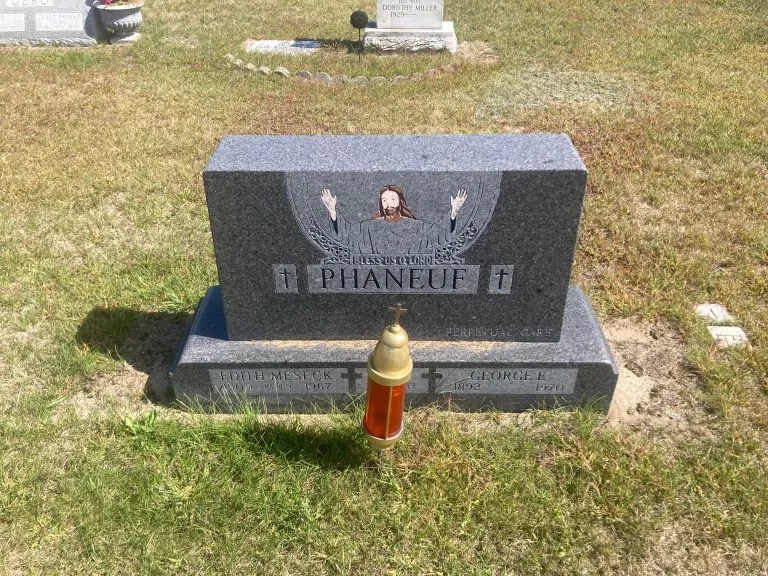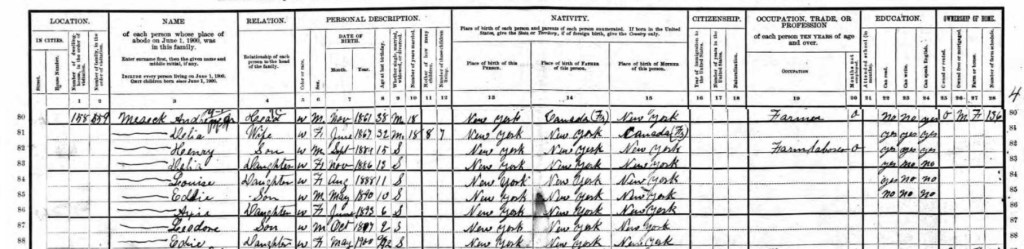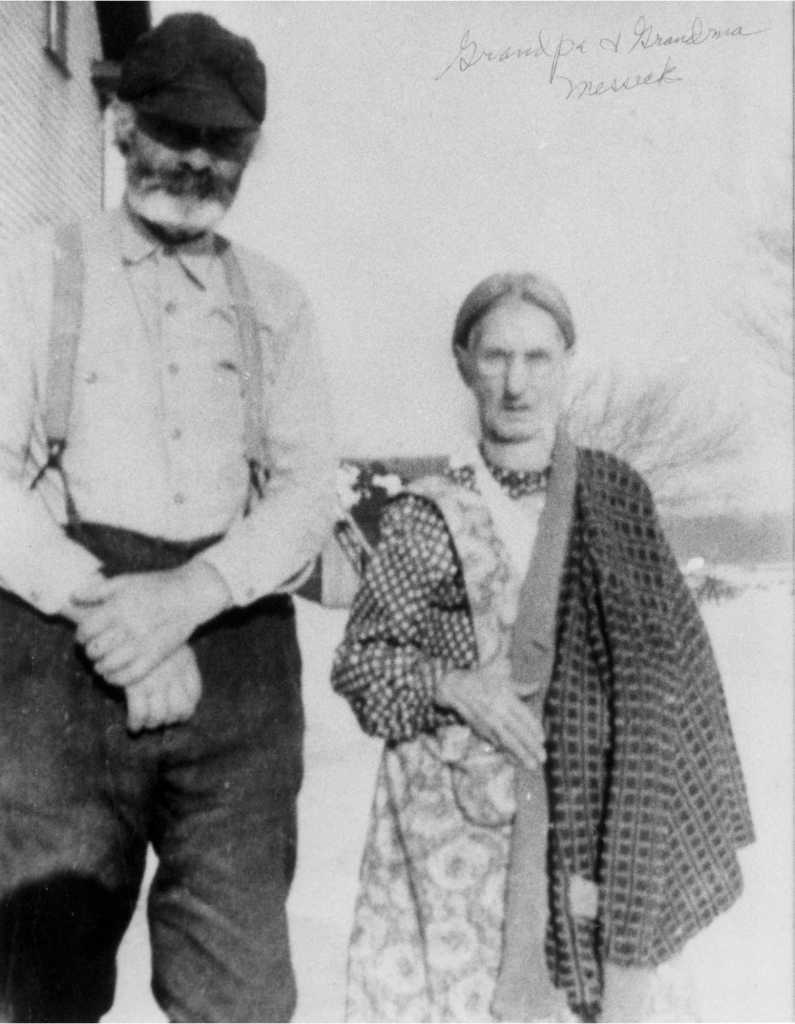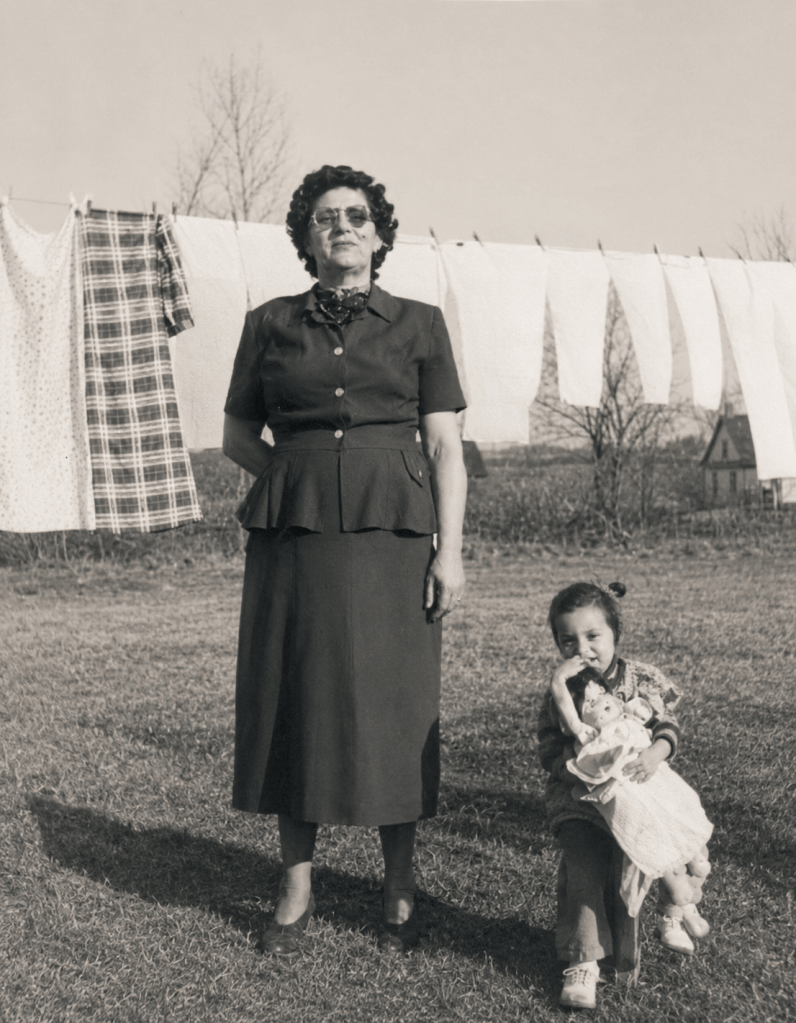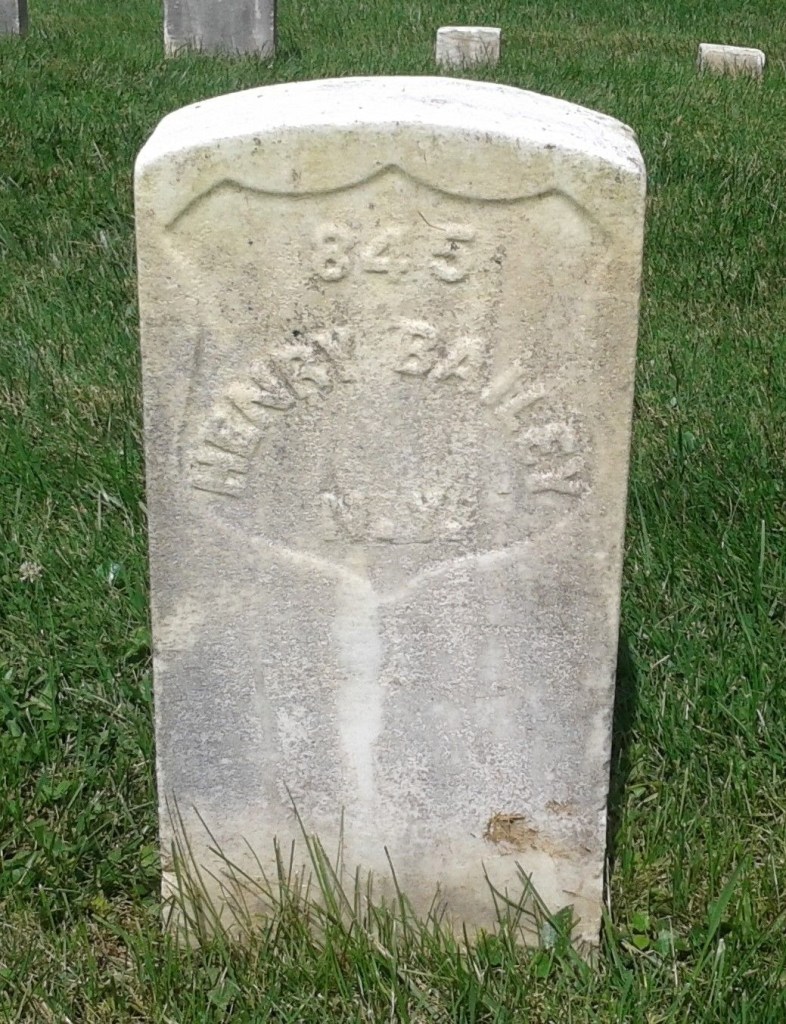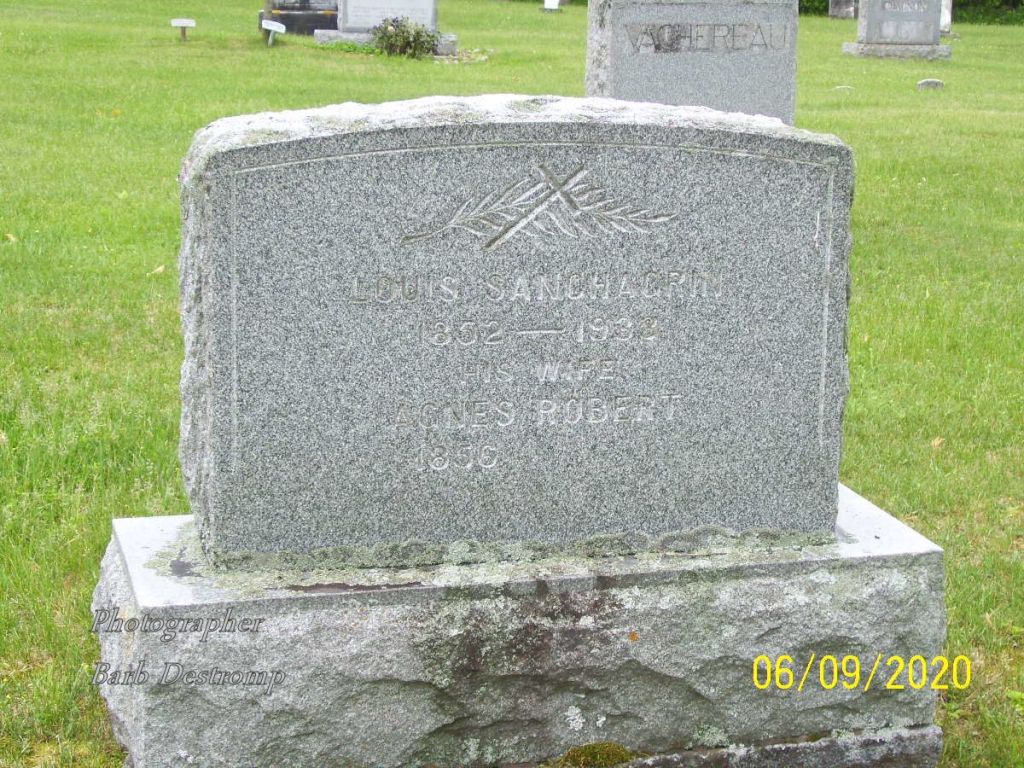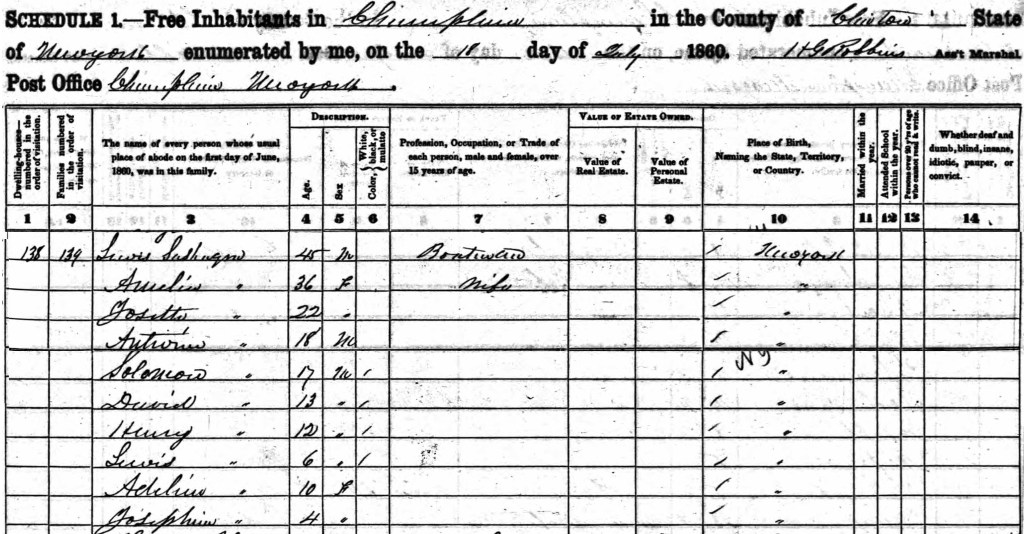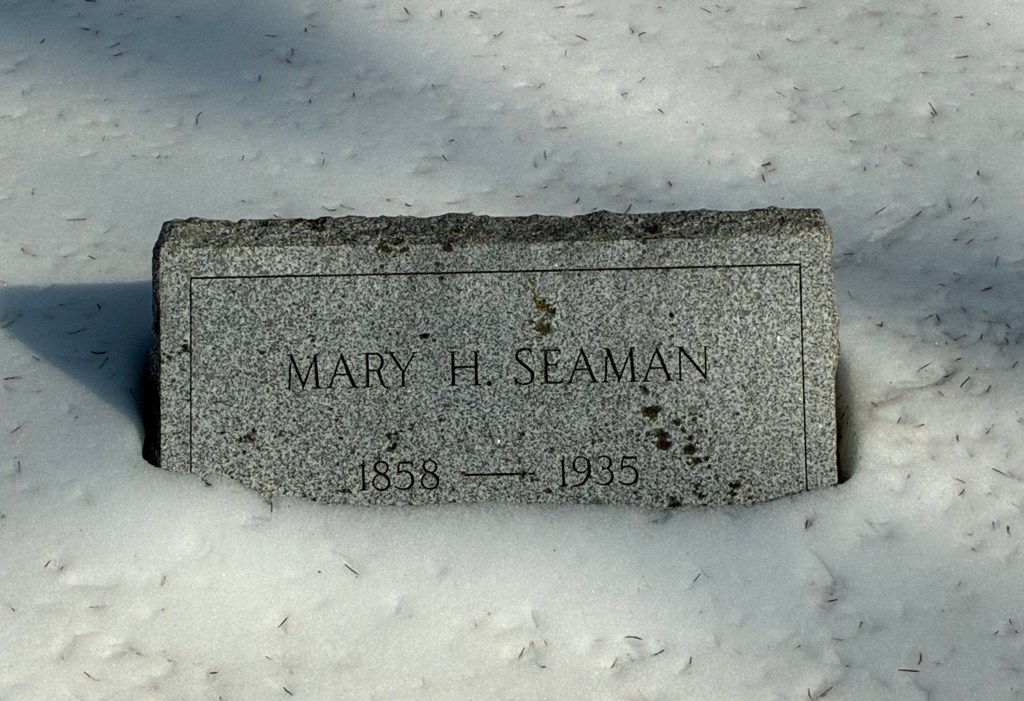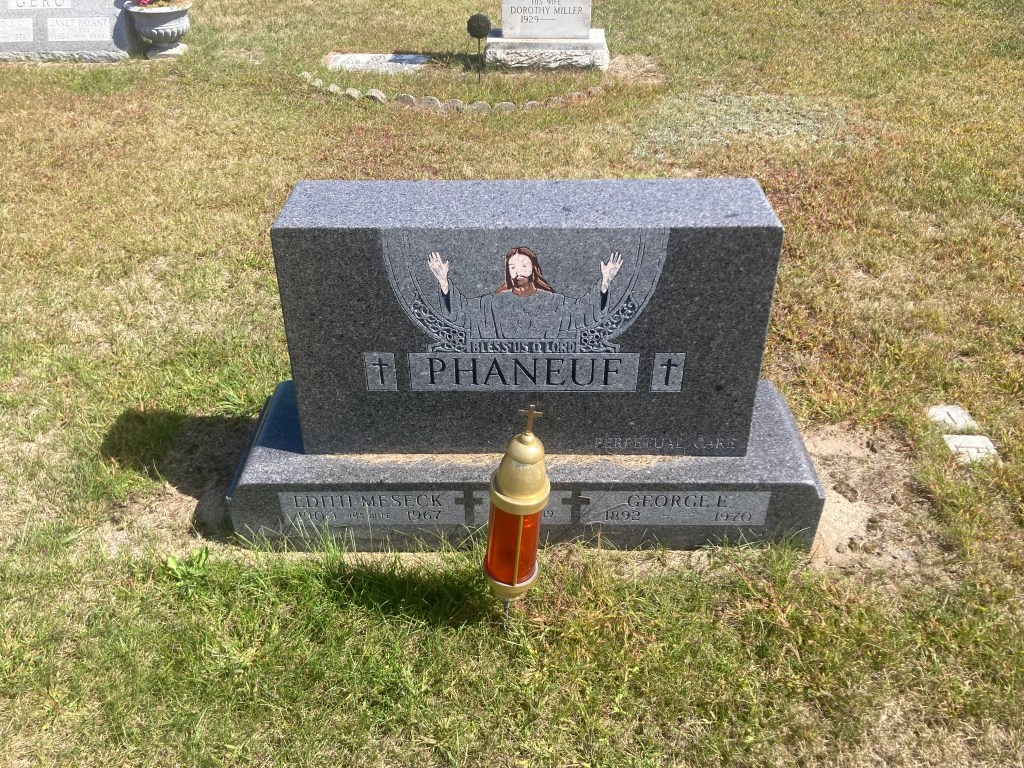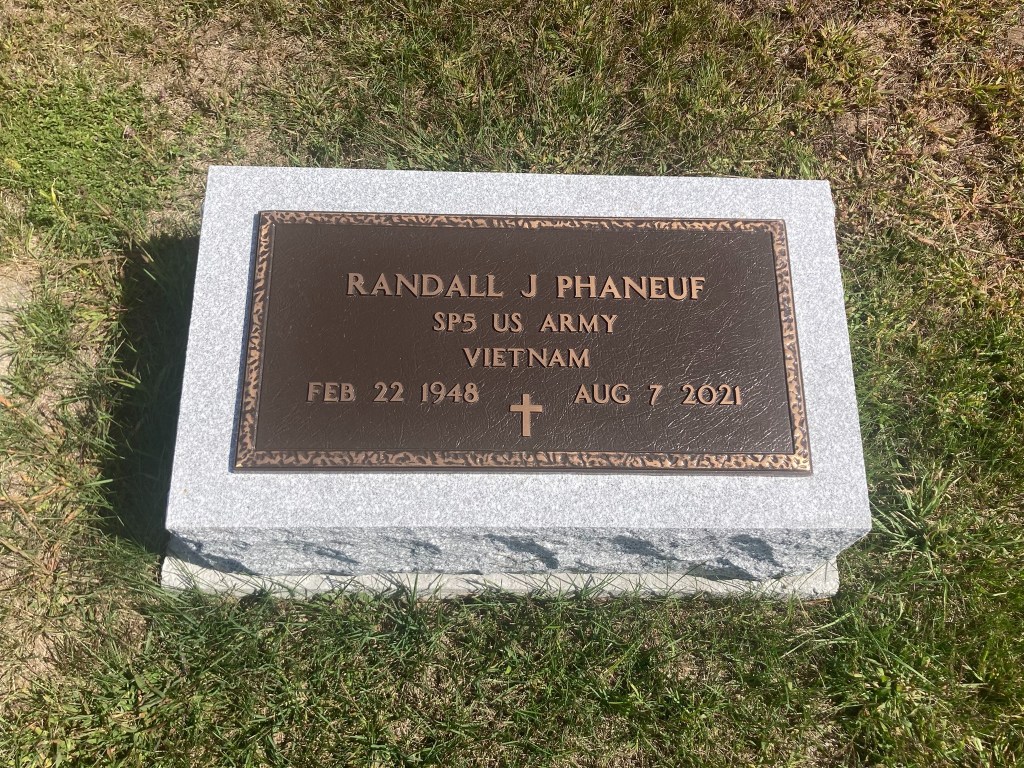
Randall Phaneuf’s grave in Saint Ann’s Cemetery, Mooers Forks, NY
Source: author’s personal collection
In Saint Ann’s Cemetery in Mooers Forks, New York, a modest grave marker bears the name Randall J. Phaneuf—known to those who loved him simply as Randy. Outside of the date of his birth and the date of his death, it records that Randy was a SP5 in the United States Army, a veteran of Vietnam.1 The stone offers only a fragment of a life shaped by a distant war and a quiet return home, leaving unspoken the fears, routines, and moments of reflection that defined his service. Yet Randy can still speak for himself through the letters he sent to his uncle and the photographs he took during his service. By recovering his voice, we can shed light on the wartime experience of Americans who served in Vietnam and how those experiences forever altered the lives of a generation.
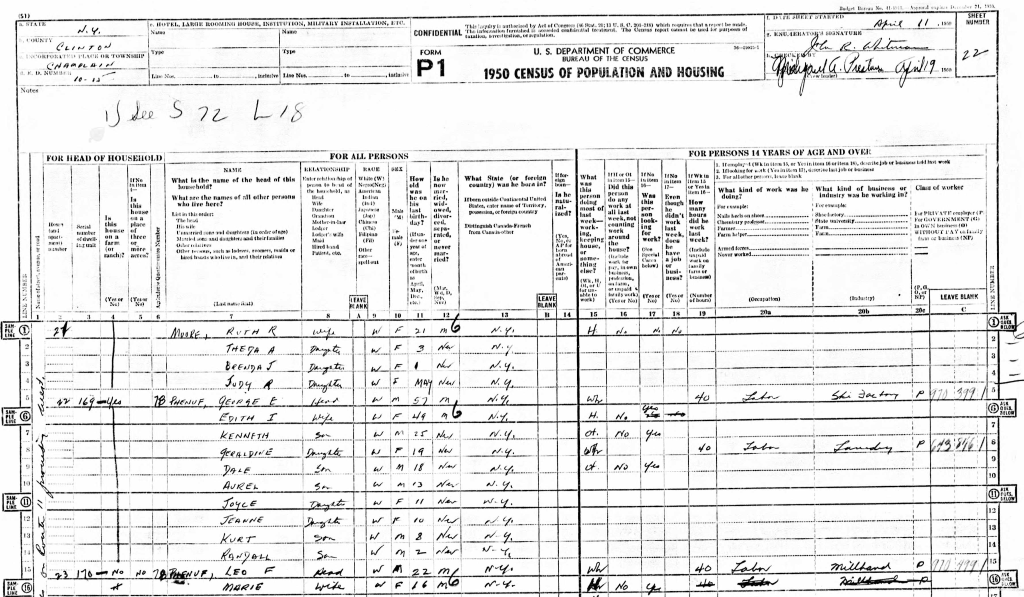
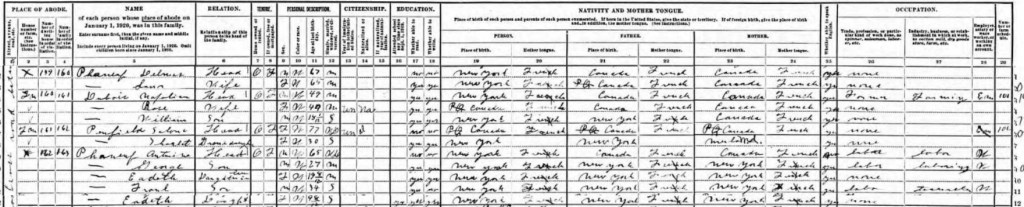
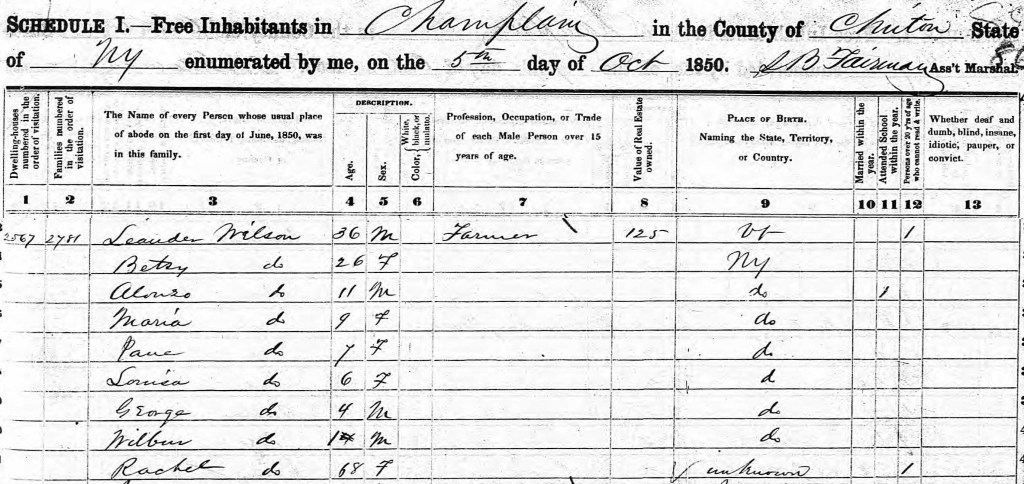
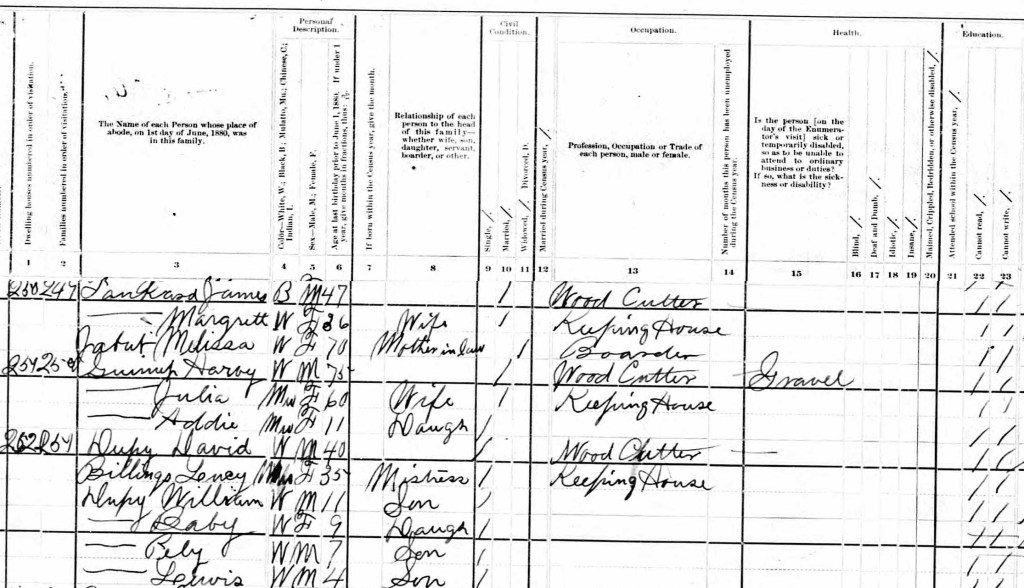
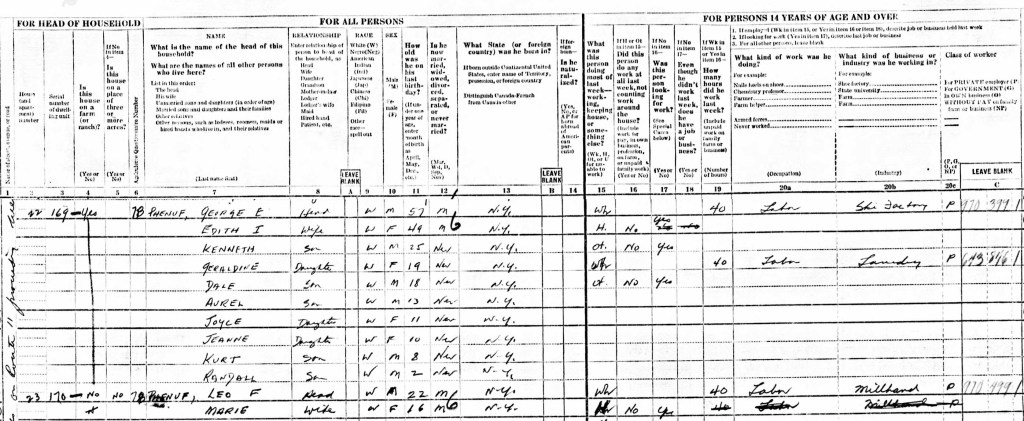
The multi-generational Phaneuf household in 1950, including two-year-old Randy
Source: 1950 US census, Clinton County, New York, population schedule, Champlain Township.
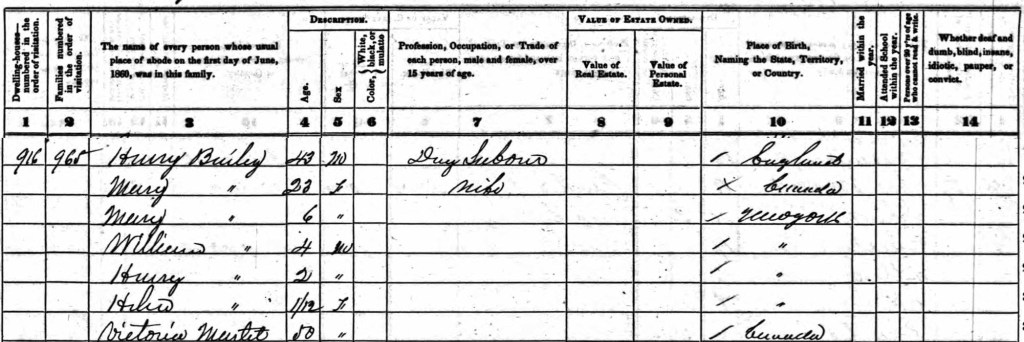
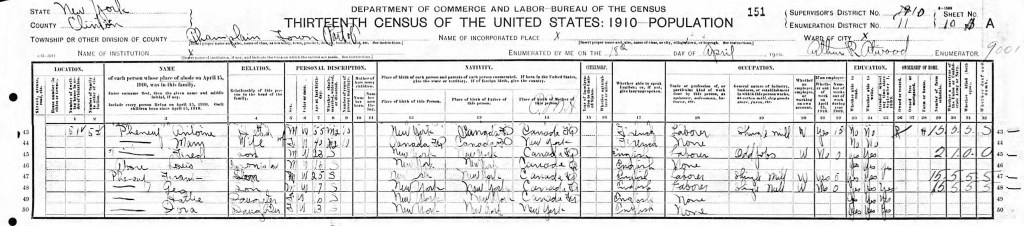
Randy was born on February 22, 1948, into a close-knit extended family that shaped daily life in rural upstate New York. He spent his early childhood in a crowded, multigenerational household in the hamlet of Perry’s Mills in Champlain, where he lived with his mother, Geraldine; his maternal grandparents, George and Edith Phaneuf; and several of his mother’s siblings—an arrangement common in postwar rural America.2 Among them was his uncle Kenneth, a World War II veteran who had served in Italy and was then in his mid-twenties, only a few years removed from his own war.3 The family home on Mill Street was defined by long days of shared labor and strong family bonds, a place where everyone contributed to the work of maintaining the household. While his mother worked full-time at the local laundry and his grandfather at a nearby ski factory, Randy’s days were largely spent alongside a different uncle, Kurt, just six years his senior, whose presence during these formative years would later make him the natural recipient of the letters Randy sent home from Vietnam.
Life on Mill Street unfolded within a narrow physical space but a wide web of obligation and connection. The dead-end road itself terminated at the Kaufman lumber and saw mill just across from the Phaneuf home, and its presence shaped the cadence of everyday life. The mill was not simply nearby; it was part of the family. In 1950, Randy’s uncle Leo worked there, as did other uncles over the years, alongside his grandfather.4 The sounds of sawing and loading were part of the background of Randy’s childhood, and the work done there sustained the multigenerational household on Mill Street. Even as a boy, Randy was drawn into this economy of shared labor. He occasionally helped his grandfather with small tasks—stacking shingles for packing at the mill, running errands, or lending a hand where he could—absorbing early lessons about responsibility and contribution.
Work also extended beyond the mill and into the soil. A large garden was planted each year to feed the family, and the grandchildren were expected to help. Under the steady direction of his grandmother Edith, Randy learned to plant, weed, and harvest, and by autumn he participated in the seasonal ritual of canning, when the year’s labor was preserved for the winter ahead.
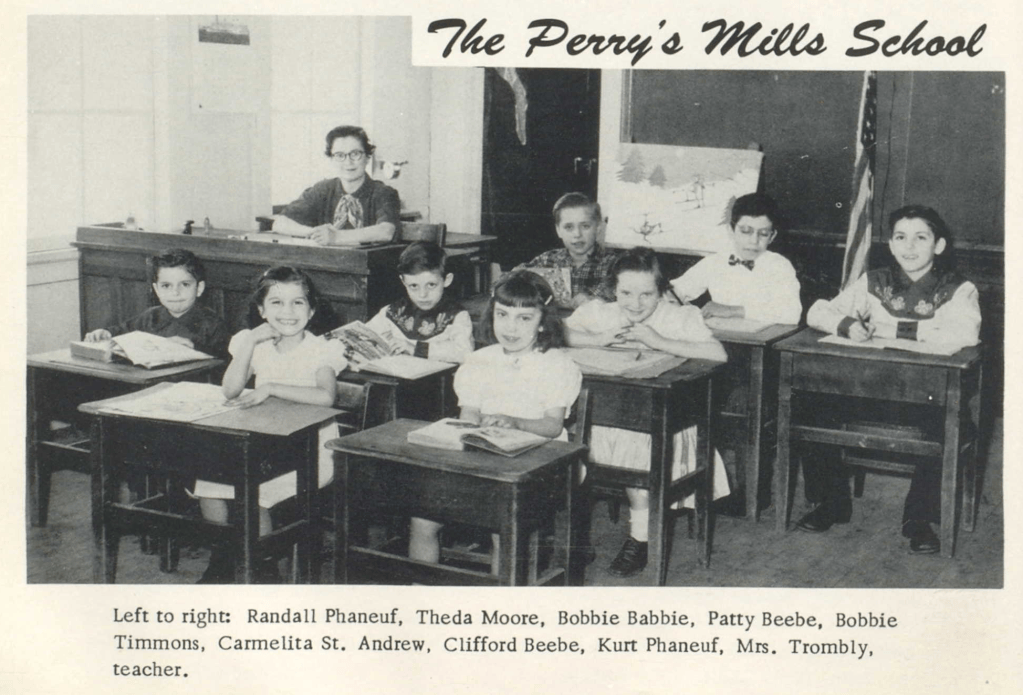
Randy and the rest of the students at the one-room schoolhouse in Perry’s Mills, circa 1954
Source: Ancestry.com
School added another rhythm to Randy’s early life, one that carried him beyond Mill Street while remaining firmly rooted in the same community. He began his education at the one-room schoolhouse in Perry’s Mills, a setting that mirrored the interwoven nature of family and daily life. A photograph from 1954 shows six-year-old Randy seated among just seven other children under the care of Mrs. Trombley, the sole teacher responsible for students ranging widely in age. Among the older children was his uncle Kurt, then twelve, reinforcing the closeness of kinship that defined Randy’s world.5 In this shared classroom, younger students learned by listening to lessons meant for older ones, while older children absorbed responsibility by assisting the younger. School was not a separate sphere but an extension of the same communal structure that governed work and home life.
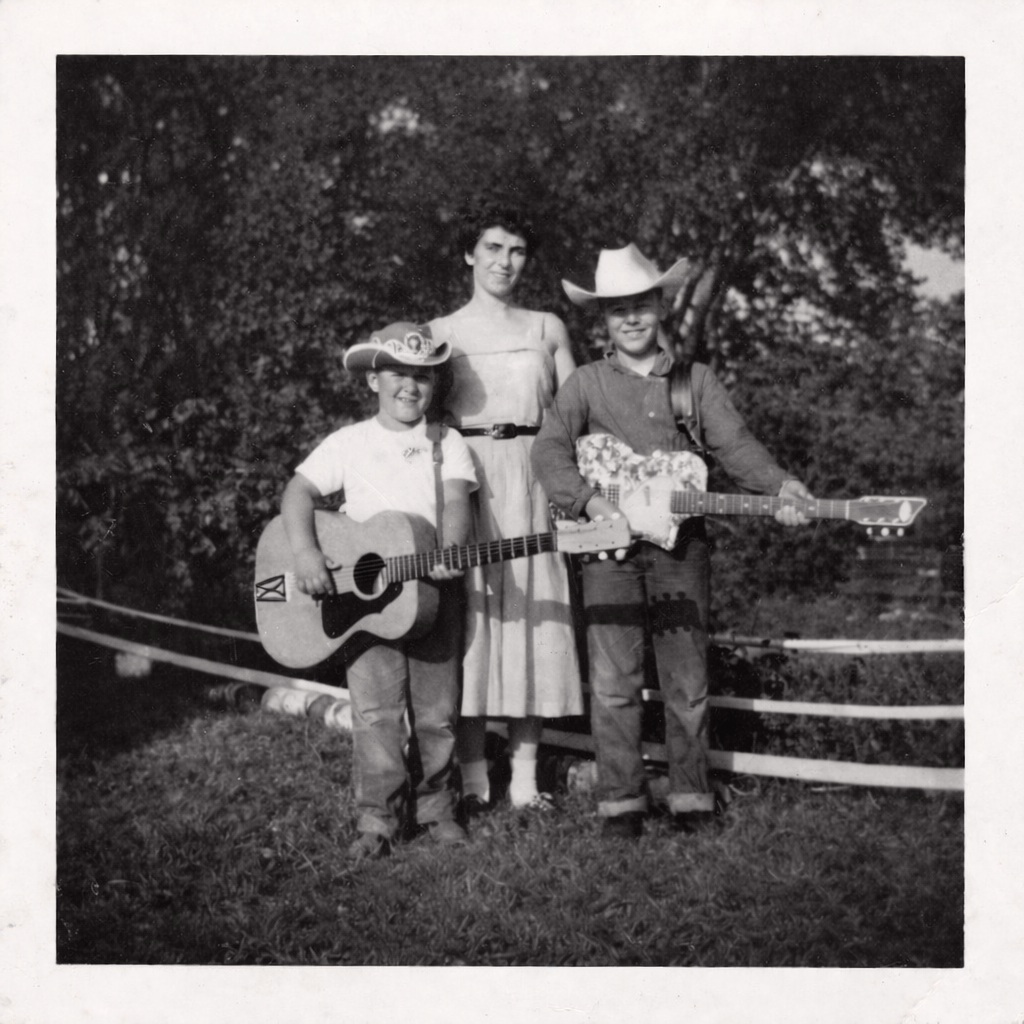
Randy with his younger brother Donnie and mother Geraldina circa 1958
Source: author’s personal collection
Yet Mill Street was not defined solely by labor and routine. There was also room for joy, and it often took shape inside the Phaneuf home itself. At various times, furniture was pushed aside, the main floor cleared, and relatives and neighbors gathered for evenings of music and dancing. These informal dance parties offered a release from the demands of mill work, gardening, and school, transforming the house into a space of shared celebration. Music filled the room, feet moved across worn floors, and bonds of kinship and community were reinforced through collective pleasure. For Randy, these gatherings provided balance to the responsibilities of childhood and planted a love of music that would endure throughout his life. Together, work, school, and play formed a steady rhythm on Mill Street—one that shaped Randy’s understanding of duty, belonging, and resilience long before he would encounter a world far removed from this dead-end road in northern New York.
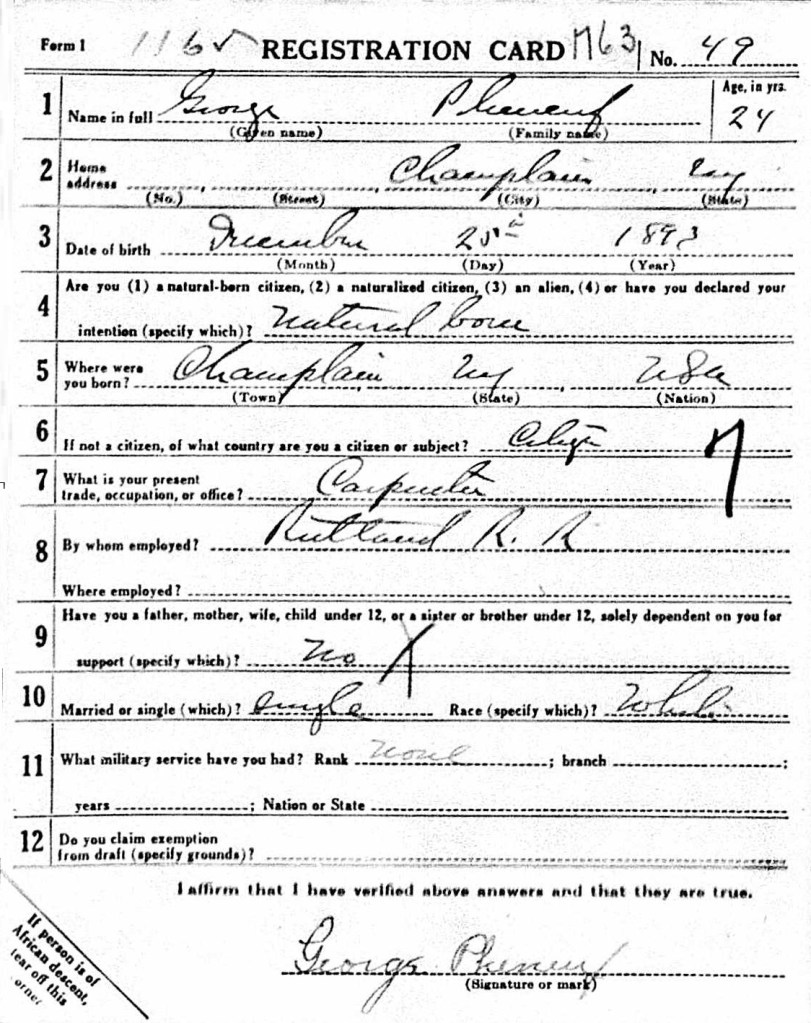
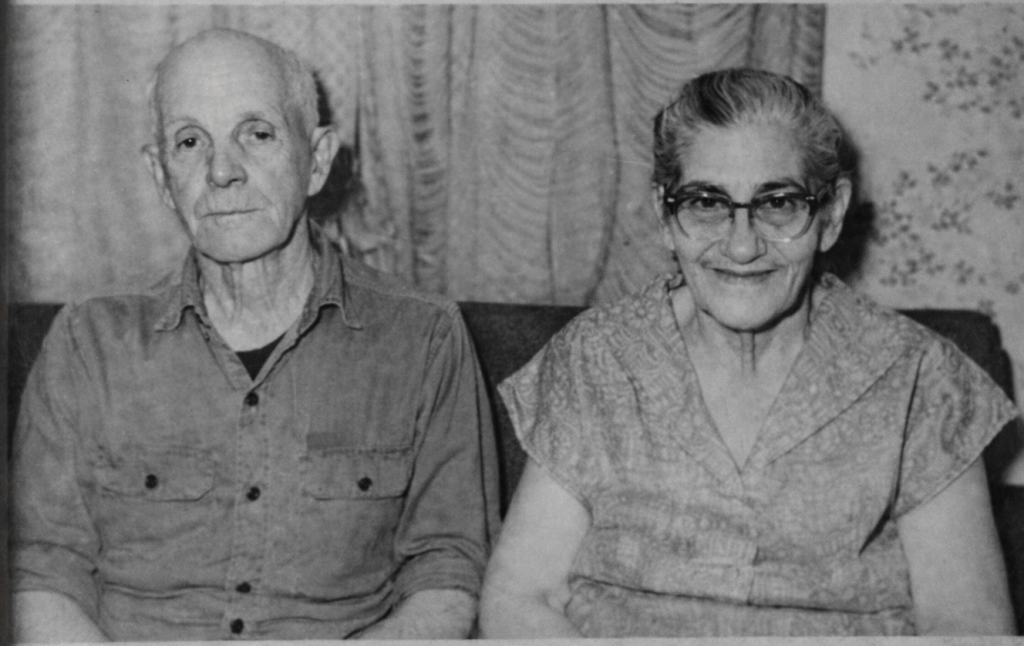
As the 1950s gave way to the early 1960s, the family world that had shaped Randy’s childhood began to expand rather than disappear. After his early years in the multigenerational household on Mill Street, Randy moved with his mother into a home with her husband, Frank Parker — a decorated veteran of the U.S. Army’s 101st Airborne Division, the “Screaming Eagles,” who had served in World War II.6 While this marked a shift toward life within a nuclear family, it did not sever the ties that had defined his upbringing. His grandparents and extended family continued to live nearby, and Mill Street remained a constant presence in his daily life. During these same years, Randy’s family grew with the arrival of three younger brothers—Donnie, Frank Jr., and Dave—gradually reshaping his role within the household while reinforcing the importance of family responsibility and connection. It also meant that a veteran’s service was no longer a distant or abstract thing in Randy’s world, but a fact of daily life under his own roof, years before he volunteered for his own.
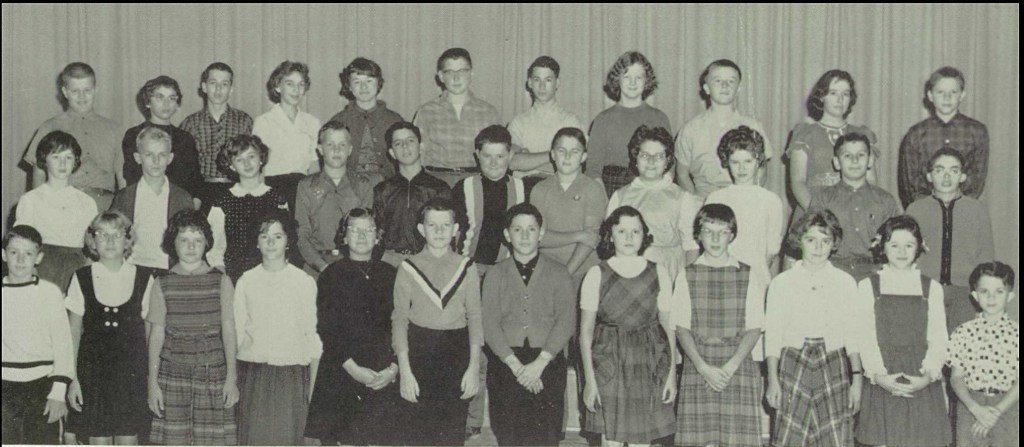
Randy in 7th grade at Champlain Central, circa 1963–fifth from the left in the middle row
Source: Ancestry.com
Randy’s schooling followed a similar pattern of change tempered by continuity. He left the one-room schoolhouse of Perry’s Mills to attend Champlain Elementary and later Champlain Central High School, entering a consolidated system with larger classrooms, more formal routines, and clearer divisions by age.
Outside the school day, however, life retained its familiar rural rhythm. Randy and Donnie, closest in age, spent much of their time together fishing local waters, hunting in nearby woods, and playing sports such as baseball. Work also remained part of everyday life. Both boys continued to help at the mill and to lend a hand at their grandparents’ home on Mill Street, where time in the garden and shared labor with extended family reinforced the same values of cooperation and responsibility that had shaped Randy’s earliest years.
By November 1966, the steady rhythms of family, work, and school that had defined Randy’s life gave way to a decisive rupture. Rather than being drafted, he volunteered for three years of service with the Army, a choice that marked his first sustained separation from the family and community that had long anchored him. Upon enlistment, he was sent to basic training at Fort Dix, New Jersey, a sprawling installation that processed thousands of young men bound for Vietnam.7 There, the familiar cadences of rural life were replaced by pre-dawn wake-ups, rigid schedules, and relentless discipline. Weeks of physical conditioning, weapons training, and drill were designed to strip away civilian habits and impose uniformity, endurance, and obedience under constant pressure to perform.
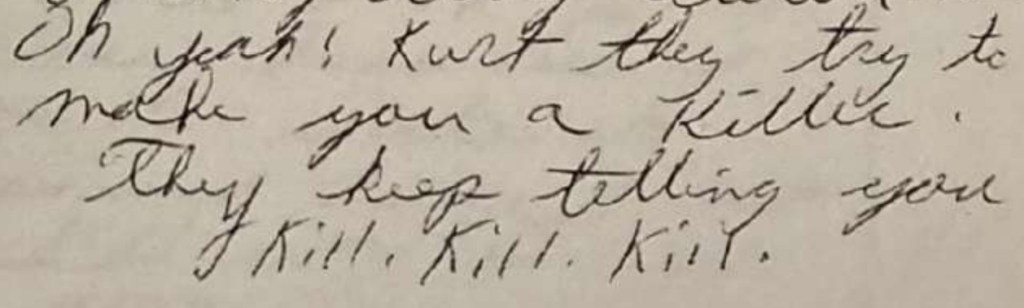
A portion of Randy’s January 1967 letter to his uncle
Source: author’s personal collection
Randy’s earliest letters from Fort Dix capture the shock of this transition with striking immediacy. Writing to his uncle in hurried, uneven handwriting that reflected both the cold and his nervous energy, he described his first encounters with military life in blunt, physical terms. “It’s colder than a bitch down hear,”8 he wrote, before turning to the practical details of induction: learning to handle the M-14 rifle, a “pretty big” weapon that could fire “automatic, semiautomatic,” and memorizing his service number, rifle serial number, name, and rank. Recently inducted, the young mechanic from upstate New York was already becoming aware that basic training demanded more than technical competence. “Kurt,” he added, “they try to make you a killer. They keep telling you Kill. Kill. Kill.”9
The physical and psychological disorientation Randy described was reinforced through deliberately stressful training exercises. In one account, he recalled a gas chamber drill that left him temporarily blinded and injured: “I got some tear gas in my eye and I couldn’t see. I ran in to a wall. It nearly knocked me out. It make you eyes burn like fire.”10 Such episodes underscore the extent to which basic training subjected recruits to deliberately stressful conditions designed to test their physical and psychological endurance.
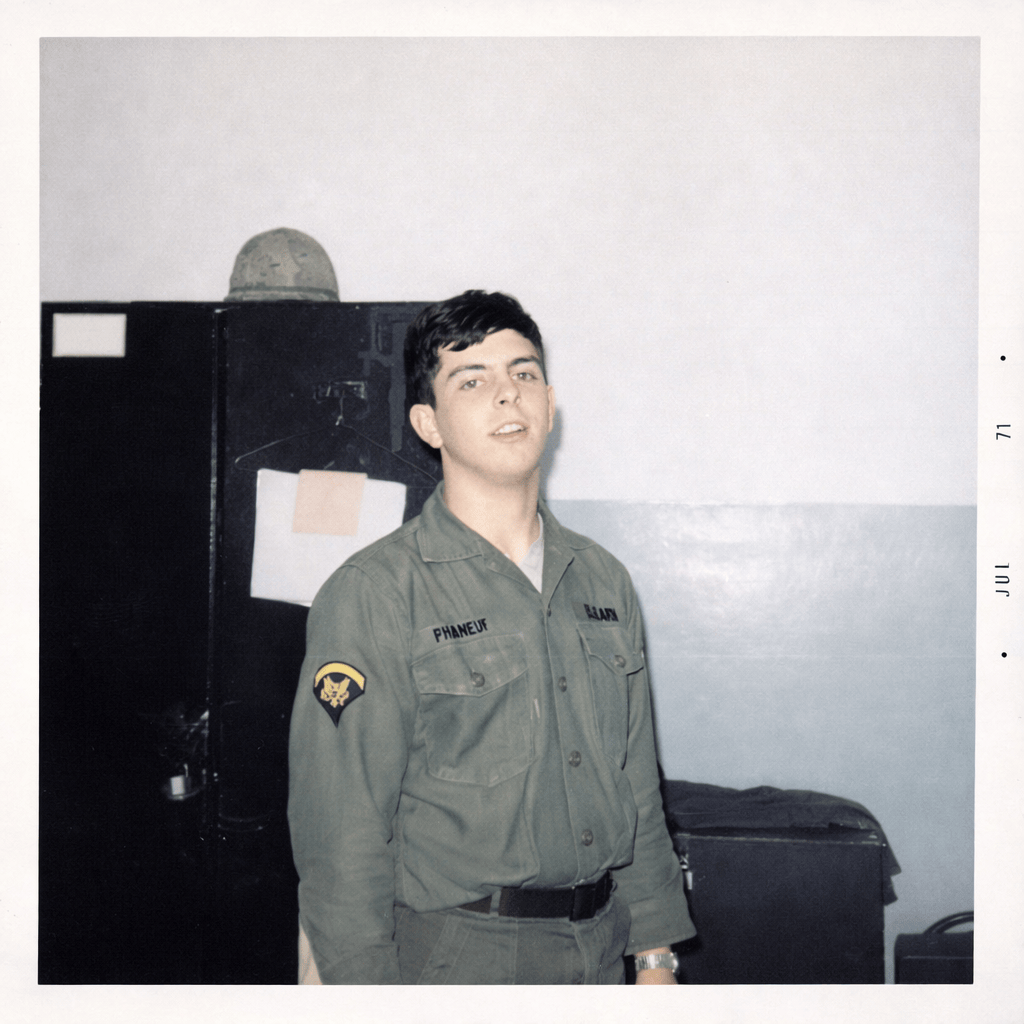
Randy during his early service
Source: author’s personal collection
Within this environment, Randy’s repeated assertions of confidence read as both bravado and self-persuasion. “I’m not afraid of any body down here,” he insisted, even as he acknowledged the Army’s efforts to harden him psychologically. In that same letter, he notes, “They just think there tough but if one every grab me I kick him.”11 These statements reveal a young man negotiating the demands of military masculinity—projecting toughness in a setting that discouraged vulnerability even as his letters reveal growing uncertainty about what lay ahead. From the outset, military service demanded not only physical endurance, but the sustained suppression of emotion, a pattern that would recur throughout his wartime correspondence.
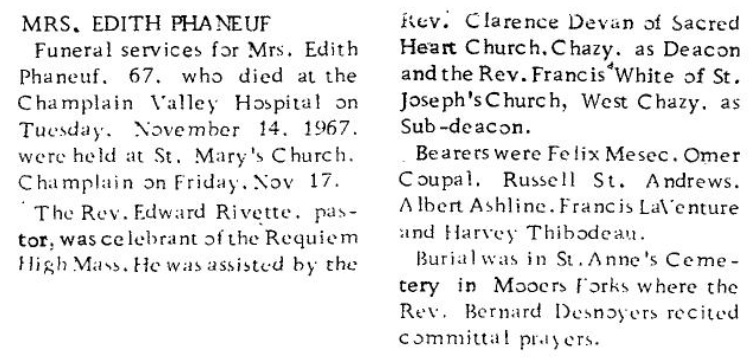
It was during this period of intense transformation that Randy experienced a loss that underscored the growing distance—both physical and emotional—separating him from home. On November 14, 1967, his grandmother Edith, to whom he was deeply attached and who had played a central role in his upbringing on Mill Street, passed away.12 Unable to get leave to attend her wake or funeral, he was forced to grieve from afar for the first time in his life. Although his grandfather George continued to live nearby, anchoring the family’s long presence in the Perry’s Mills area, Edith’s death marked the end of a formative chapter for Randy. The convergence of these two events—his initiation into military life and the loss of a guiding family figure—foreshadowed the isolation and emotional strain he would confront as his service carried him far beyond northern New York and into the war in Vietnam.
After completing basic training at Fort Dix in early 1967, Randy was assigned to an Army base in Aschaffenburg, Germany.13 For the young man from Perry’s Mills, this posting marked his first sustained encounter with the wider world beyond northern New York, where he was a soldier suspended between two worlds—drawn to the novelty of travel and foreign places, yet increasingly aware of how deeply his sense of self remained rooted in home.
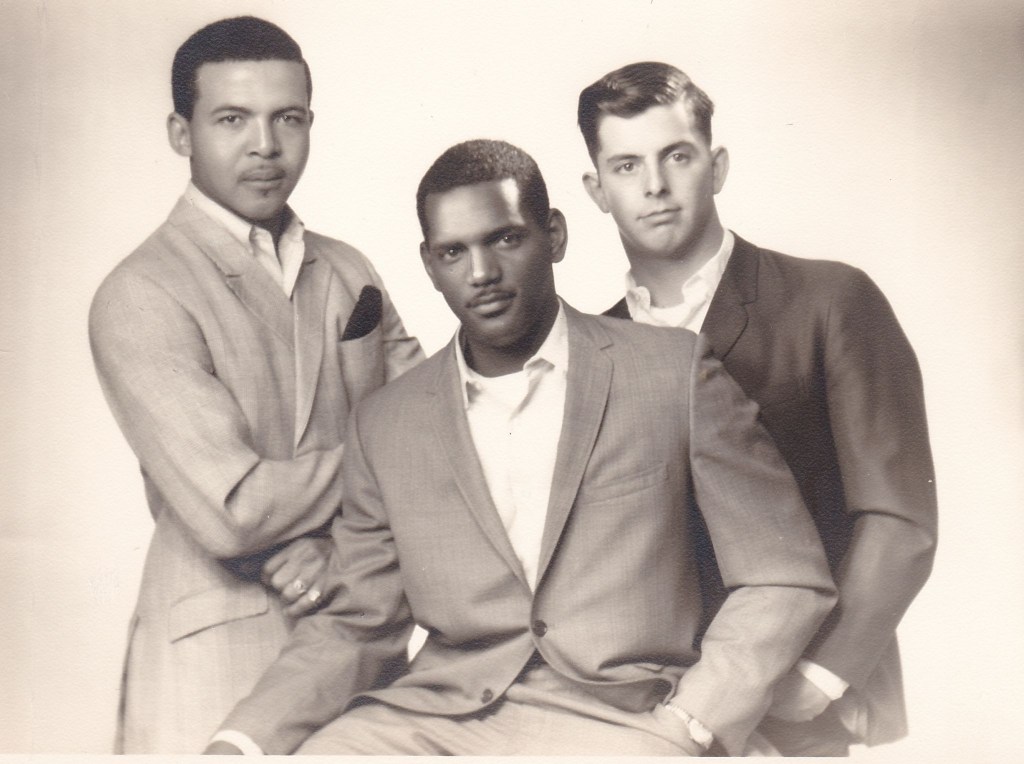
Randy and two of his fellow GIs in Europe circa 1968
Source: author’s personal collection
Stationed in Aschaffenburg—a Bavarian city Randy noted in his letters as having “about 57,000 people”—he encountered a world far larger than Perry’s Mills, yet one still deeply shaped by the aftermath of World War II and the Cold War.14 He took numerous photos on the streets of Aschaffenburg and visited local parks to capture additional images. He wrote of traveling to nearby cities such as Frankfurt, going to Austria on leave, and seeing the Alps for the first time—experiences far removed from the dead-end street and mill town rhythms of his childhood. “I went to Garmisch and Austria,” he told his uncle Kurt after one period of leave. “I went to the Alps. They huge. It was pertty nice.”15 These moments of wonder reflect a common feature of overseas service during the Vietnam era. Historians have noted that for many young American soldiers, postings in Europe offered their first exposure to international travel, producing a complicated mix of fascination, freedom, and dislocation.16 Randy’s letters capture that tension vividly: excitement at what he was seeing, paired with an awareness that this world, however impressive, was not his own.

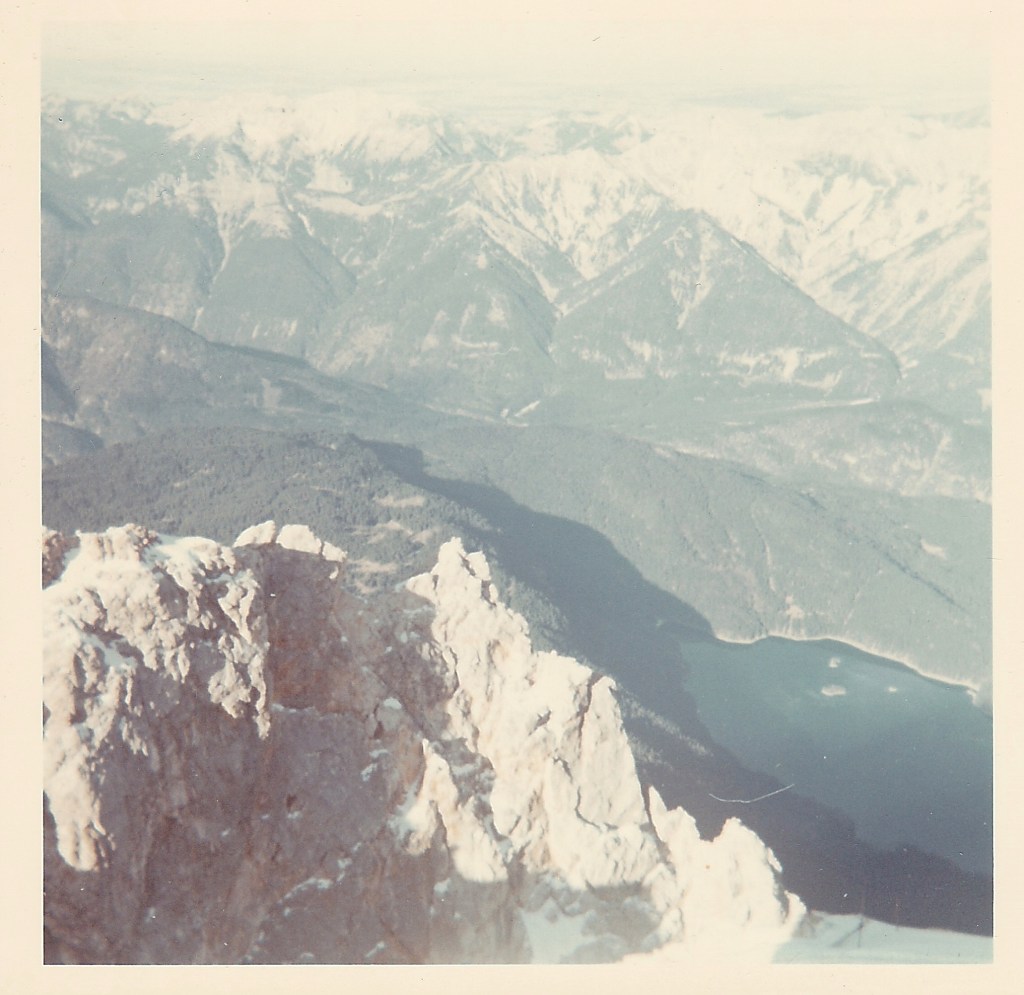
Two views of the Alps captured by Randy during his time in Germany
Source: author’s personal collection
Despite the opportunities for travel and diversion, Randy’s correspondence repeatedly circled back to home. He asked often for news of relatives. He imagined future hunting trips, buying his first car, and drinking a beer with friends and family. Germany, for all its novelty, never displaced home in his imagination. “Just wish you were over here to see Germany,” he wrote to Kurt, before adding bluntly, “but I’ll tell you there’s no place like home. I’d eat some shit if they would let me go back home.”17
His longing was concrete and insistent rather than abstract as he carefully counted the days until he could resume the life he had left behind. “I got about 642 days left,” he wrote in January.18 Then “20 month left” when he wrote the following month.19 By December he was looking forward to being home in “about ten months.”20 Randy’s steady attention to family news, local personalities, and the rhythms of Perry’s Mills was more than nostalgia—rehearsing his post-war life in such detail was how he preserved his civilian identity under military routine. By marking time so precisely, he rendered his separation survivable, bounded by an anticipated return to normalcy—a fragile sense of temporal control that would soon be shattered when his long wait in Germany gave way to sudden orders for Vietnam.21
Music emerged as one of the most powerful ways Randy sustained his connection to home and made his service in Germany more tenable. Throughout his time in Germany, his letters are saturated with references to albums, radio programs, and musicians. He listened constantly—Buck Owens, Faron Young, Jim Reeves, June Carter and Johnny Cash, Melba Montgomery, Lee Hazlewood, Wes Montgomery—and he paid close attention to Armed Forces and local radio broadcasts. “Every Saturday night they have the Grand Ole Opry on the radio,” he wrote, marveling that even overseas, familiar sounds reached him.22 Country music, in particular, carried emotional weight. When a song came on that reminded him of home, he admitted, “Makes me feel like crying.”23 For Randy, music functioned as an auditory bridge back to family, place, and memory.
That connection was made explicit in his request for recordings of Smiley Willette. Writing from Germany in January 1968, Randy asked Kurt if he could obtain tapes of Willette’s music and send them overseas. “I shore would like to get them,” he explained, noting that a friend from Moriah wanted to hear them as well.24 The request carried layered meaning. Smiley Willette, leader of the regionally renowned group Smiley Willette and his Sunset Ramblers, was not just a musician Randy admired; he was family. Willette’s wife, Alfreda, was Randy’s first cousin once removed, placing the music squarely within the web of kinship that had shaped his upbringing.25 And Kurt, the uncle to whom Randy was writing, had played guitar with Willette and Alfreda in the Sunset Ramblers. Randy was therefore asking his uncle for recordings made by people who were simultaneously part of his family and his local musical world. Kurt, to whom he was writing, had been one of the Sunset Ramblers for a time earlier in the 1960s. In asking for those tapes, Randy was longing for a piece of home—family-made music that embodied the world he missed.
Taken together, Randy’s letters from Germany depict a young soldier navigating distance through selective attachment. He embraced travel, admired foreign landscapes, and sampled new experiences, yet remained emotionally anchored to Perry’s Mills through family ties, shared memories, and the familiar sounds of country and western music. Germany became a place where he learned to live with distance from home and to sustain his sense of identity across distance. These strategies—counting days, writing letters, listening to music—would soon be tested under far more severe conditions, as his service carried him from Europe into the war zone of Vietnam.
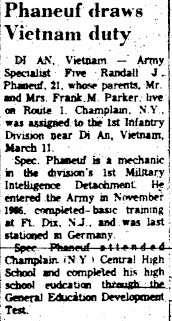
The newspaper article announcing Randy’s tour of duty in Vietnam
Source: Press-Republican, April 18, 1969
The expectation of an imminent return home was abruptly shattered in March 1969, when Randy received orders deploying him to Vietnam. He arrived in-country on March 11, 1969, and was assigned as a mechanic in the 1st Military Intelligence Detachment of the 1st Infantry Division.26 By the time of his arrival, the division had already spent years engaged in sustained combat operations northwest of Saigon, including in the Iron Triangle and along Highway 13, areas synonymous with ambush warfare and heavy casualties. Randy entered Vietnam at a moment when American forces were simultaneously fighting an intensifying war and preparing for eventual withdrawal under the policy of Vietnamization—a contradiction that shaped the conditions of his service from the outset.
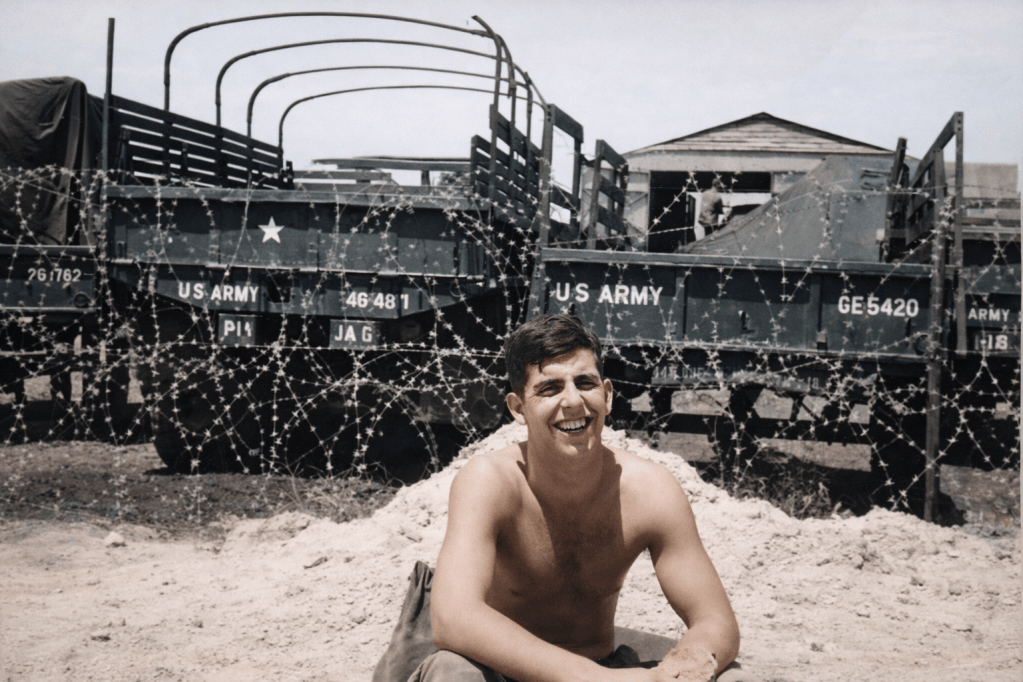
Randy early in his tour of duty in Vietnam
Source: author’s personal collection
Randy’s earliest letters from Vietnam emphasize the physical shock of arrival. Writing just four days after landing, he focused on heat and filth as the most immediate markers of dislocation. “It shore is hot over here,” he told his uncle Kurt—“about 120° during the day about 90° at night.” His barracks, he added with bitter irony, had “about an inch of dirt on the floor,” a condition he described as “real first class livin.” Work offered no reprieve: “We work seven days a week around here,” with only “a few hours off once in a while.”27 These details—heat, dirt, exhaustion—mirror patterns widely documented in Vietnam-era correspondence, where environmental extremes became the first language soldiers used to convey the disorientation of a combat zone’s most destabilizing early weeks.28 Randy’s humor, thinly veiled in sarcasm, functioned as a coping strategy, allowing him to articulate dissatisfaction without open complaint.
Within weeks, however, physical discomfort gave way to explicit fear. In a letter dated March 30, Randy acknowledged a growing anxiety: “Just a little nervous that’s all. It sure is hell over here there’s no question about that.” He had already been sent deep into contested terrain—“20 miles into enemy territory yesterday”—an experience he described with unfiltered terror: “Boy I was scared like a Mother F____.”29 He also complained bitterly that his commanding officer expected him to “go all over the place” despite having “never been there before,” capturing the disorientation of a war fought without clear front lines or familiar terrain. Vietnam placed Randy in an environment where danger could appear without warning and where he often had little sense of the terrain around him.30 His frustration was compounded by the feeling that those sending him into unfamiliar territory did not understand—or did not care about—the risks he faced.
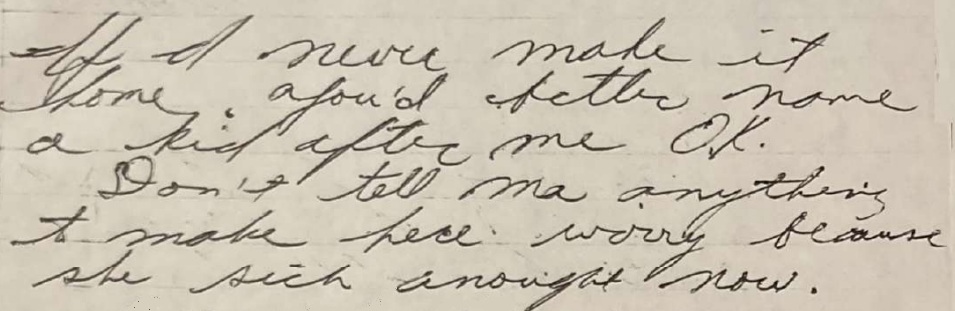
A portion of Randy’s March 30, 1969 letter to his uncle
Source: author’s personal collection
Even as fear sharpened, Randy worked to contain its impact on those at home. “Don’t tell ma anything to make her worry,” he urged Kurt, explaining that his mother was “sick anough now.”31 This request reveals a widening emotional distance between Randy’s lived experience and what he felt able—or willing—to share with his immediate family. His uncle became a buffer, a trusted intermediary through whom fear could be expressed without burdening his mother. Yet even within this guarded space, Randy confronted mortality directly. “If I never make it home,” he wrote, “you’d better name a kid after me.”32 Such statements mark a psychological threshold commonly identified in combat correspondence: the first written acknowledgment of the possibility of death.33 By imagining how he might be remembered if he did not survive, Randy confronted a possibility that had previously remained largely unspoken.
As his deployment continued, anxiety deepened into exhaustion and foreboding. Letters from April through September describe these changes. “You have to sleep with one eye open around here.”34 “When that siren go off,” he wrote, “it’s time to run for one of the bunkers because Charlie coming.”35 Night brought no relief. Guard duty, monsoon rains, and relentless explosions eroded any sense of safety. “The days are shore long now for me. They seem like a week and Boy that’s bad.”36 Time, once carefully counted as a means of endurance, now stretched painfully.
Still, Randy clung to the familiar anchors established in earlier letters. Music remained a crucial connection to home and identity. He wrote repeatedly about Glen Campbell, Merle Haggard, and other country artists, noting that certain songs played regularly on Armed Forces radio.37 These musical references were not incidental. As with his requests for Smiley Willette’s recordings in Germany, music functioned as a portable version of home—something stable in a landscape defined by chaos. Cultural historians have emphasized the role of music in sustaining emotional continuity among Vietnam-era soldiers, particularly those from rural backgrounds for whom country music reinforced a sense of place and belonging.38
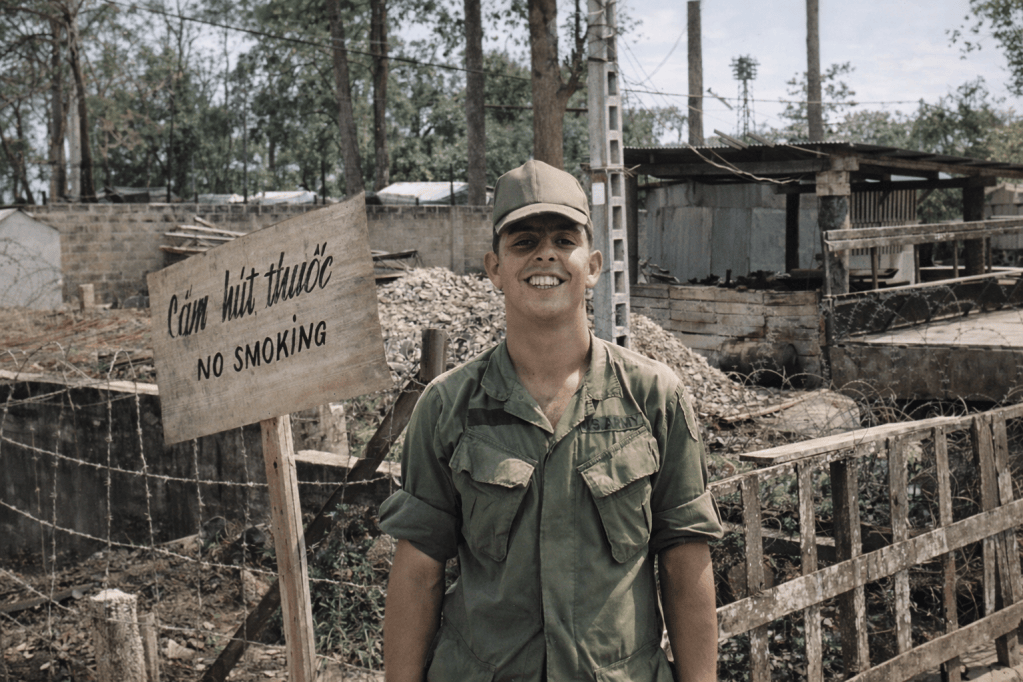
Randy later during his tour of duty in Vietnam
Source: author’s personal collection
Yet alongside these coping mechanisms, Randy’s disenchantment with the Army hardened into open rage. By September, his language toward authority had turned violent and unrestrained, particularly when describing his commanding officer.39 Such expressions marked a striking change from the nervous uncertainty of his earliest letters.40 By this point, fear had become intertwined with anger toward the Army and the officers he believed were responsible for placing him at risk. The Army, once a structure to be endured, became an object of hatred. His final letter from Vietnam ended with a blunt postscript—“P.S. F.T.A.”—a phrase widely used among disillusioned soldiers to signal total rejection of the institution that had claimed their youth and safety.41
Randy’s letters also reveal a growing preoccupation with survival as an individual responsibility. “They don’t care what happen to you,” he wrote after a three-day patrol. “You have to take care of your own self if you want to survive.”42 This belief—that survival depended less on leadership or strategy than on personal vigilance—was common among Vietnam veterans and has been identified as a key contributor to long-term psychological injury. As a mechanic, Randy’s own work put him in direct contact with what that vigilance was guarding against: he was the one who repaired the vehicles that came back from ambushes, and at times he was sent into the field to repair them. In June, he reported that two soldiers had been killed in an ambush and that a close friend narrowly survived a rocket attack.43
Throughout this period, Randy continued to count days. “208 days left to go.” “194 days left to go.” “143 days more.” “53 days.” “About a month left.”44 Time remained his primary means of endurance, even as the days themselves grew heavier. The ritual of counting transformed suffering into something finite, survivable. “That’s what keeps me going,” he wrote simply.45
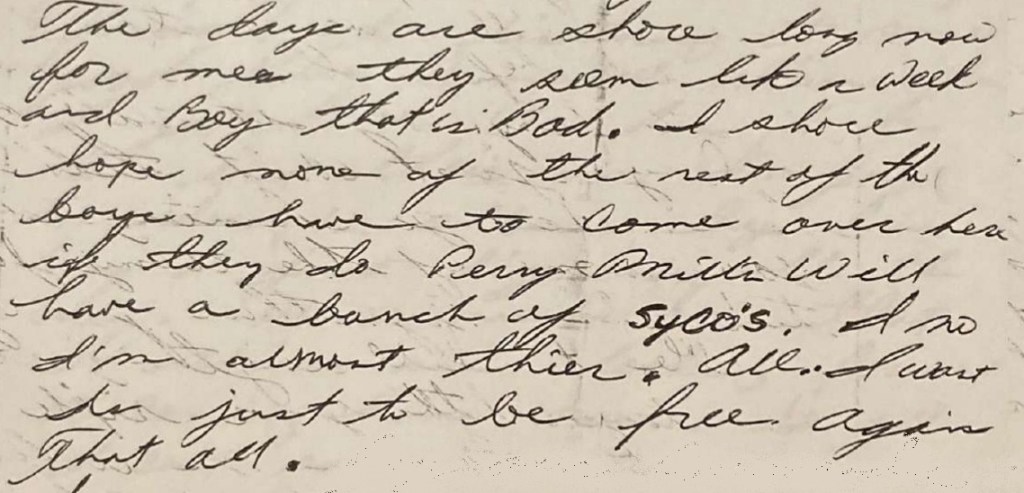
A portion of Randy’s September 14, 1969 letter to his uncle
Source: author’s personal collection
By the time Randy prepared to leave Vietnam, he no longer framed home merely as a destination, but as salvation. “All I want is just to be free again,” he wrote.46 Freedom, not victory or service, had become the governing aspiration. In that sense, his letters trace a transformation shared by many Vietnam veterans: from endurance, to fear, to anger, and finally to a single consuming hope—that survival would be enough.
Randy completed his tour and was honorably discharged from the U.S. Army on November 9, 1969. His military record noted steady advancement rather than distinction in battle: the National Defense Service Medal, the Vietnam Service Medal, the Vietnam Campaign Medal, the Army Commendation Medal, and the rank of Specialist 5 (E-5) — a rank he had tracked toward in his letters home. On paper, his service ended cleanly, the record of a soldier who did what was asked and came back.47
Upon Randy’s return home in late 1969, the term “post-traumatic stress disorder” did not yet exist as the diagnosis it would become. The symptoms that would later be associated with PTSD—including insomnia, irritability, anger, and withdrawal—were not yet understood within the diagnostic framework that would emerge in the following decade. Randy returned to a world that had no language for what he was carrying. He struggled to manage the interpersonal demands of relationships and steady employment. He gradually withdrew. He eventually returned to Perry’s Mills to live with his mother, stepfather, and brothers—physically returning to the place that had anchored his youth, but unable to fully reclaim the life he had envisioned in his letters. Home remained familiar, even if it could not restore the life he had left behind.
The arc of Randy’s correspondence—from the energy and complaints of basic training, to exploration and longing in Germany, to the anxious, compressed letters from Vietnam—documents a profound change in the young man who wrote them. Historical reconstruction has its limits. Some veterans returned visibly wounded; others, like Randy, came home outwardly intact, while difficulties emerged gradually and persisted across the decades. The war did not end for him in November 1969. Its effects followed him home, into work, family life, and the long years that followed.
Randy’s grave, like so many others, is unassuming. It records a name, two dates, and a record of military service, but nothing of the years he spent navigating memory, loss, and the consequences of war. Standing there, the distance between the young man who once wrote eagerly of home and the man who eventually returned to Perry’s Mills is stark. His letters allow us to see what the stone cannot: the young man who left, the soldier who feared he might not return, and the veteran who carried the war home with him. The costs of conflict are measured not only in battles fought, but in lives quietly reshaped long after conflicts end.
End notes
- Darren Phaneuf, Grave Marker of Randall J. Phaneuf, digital photograph, taken September 12, 2025, St. Ann’s Cemetery, Mooers Forks, NY, personal collection.
- 1950 US census, Clinton County, New York, population schedule, Champlain Township, George Phenuf household, house 20 dwelling 169, digital image, Ancestry (http://www.ancestry.com:accessed 2025); citing National Archives Microfilm Publication, NAID 43290879, Sheet: 22.
- Kenneth Phaneuf obituary, M.B. Clark Inc. Funeral Home, Champlain, NY, accessed September 24, 2026, https://mbclarkfuneralhome.com/tribute/details/371.
- 1950 US census, Clinton County, New York, population schedule, Champlain Township, George Phenuf household, house 20 dwelling 169, digital image, Ancestry (http://www.ancestry.com:accessed 2025); citing National Archives Microfilm Publication, NAID 43290879, Sheet: 22.
- 1954 Yearbook, Champlain Central High School (Champlain, NY), 1954, “The Perry’s Mills School” section, indexed in U.S., School Yearbooks, 1880–2012, digital image, Ancestry (http://www.ancestry.com: accessed September 23, 2026).
- “Frank M. Parker Sr.,” Obituary, Legacy Remembers, June 6, 2009, https://www.legacy.com/us/obituaries/legacyremembers/frank-parker-obituary?id=28690953.
- Randall Phaneuf to Kurt Phaneuf, undated letter, Fort Dix, New Jersey, Randall Phaneuf Letters, personal collection of the author.
- Randall Phaneuf to Kurt Phaneuf, undated, Fort Dix, New Jersey, Randall Phaneuf Letters, personal collection of the author. Spelling, punctuation, and capitalization in excerpts from Randall Phaneuf’s letters have been preserved exactly as written in the original manuscripts to maintain the authenticity of his voice. Standard editorial bracketed corrections ([sic]) have been omitted except where necessary to avoid ambiguity.
- Ibid.
- Randall Phaneuf to Kurt Phaneuf, January 19, 1967, Fort Dix, New Jersey, Randall Phaneuf Letters, personal collection of the author.
- Randall Phaneuf to Kurt Phaneuf, undated, Fort Dix, New Jersey, Randall Phaneuf Letters, personal collection of the author.
- “Mrs. Edith Phaneuf,” Press-Republican, November 18, 1967, 6, col. 4-5. “MRS. EDITH PHANEUF,” The North Countryman, November 23, 1967, 4, col. 3-4.
- Randall Phaneuf to Kurt Phaneuf, January 13, 1968, Aschaffenburg, Germany, Randall Phaneuf Letters, personal collection of the author.
- Randall Phaneuf to Kurt Phaneuf, February 6, 1968, Aschaffenburg, Germany, Randall Phaneuf Letters, personal collection of the author.
- Randall Phaneuf to Kurt Phaneuf, December 1968, Aschaffenburg, Germany, Randall Phaneuf Letters, personal collection of the author.
- For more information on the experience of US soldiers in Germany during this time, see Thomas W. Maulucci Jr. and Detlef Junker, eds., GIs in Germany: The First Thirty Years, 1945–1970 (New York: Cambridge University Press, 2010).
- Randall Phaneuf to Kurt Phaneuf, February 6, 1968, Aschaffenburg, Germany, Randall Phaneuf Letters, personal collection of the author.
- Randall Phaneuf to Kurt Phaneuf, January 13, 1968, Aschaffenburg, Germany, Randall Phaneuf Letters, personal collection of the author.
- Randall Phaneuf to Kurt Phaneuf, February 6, 1968, Aschaffenburg, Germany, Randall Phaneuf Letters, personal collection of the author.
- Randall Phaneuf to Kurt Phaneuf, December 1968, Aschaffenburg, Germany, Randall Phaneuf Letters, personal collection of the author.
- For more information on how soldier correspondence functions as a psychological mechanism to preserve civilian identity and navigate temporal separation, see Andrew Carroll, ed., Behind the Lines: Powerful and Revealing Letters Home from the American Military in World War I, World War II, Korea, and Vietnam (New York: Scribner, 2005), 15–28.
- Randall Phaneuf to Kurt Phaneuf, January 13, 1968, Aschaffenburg, Germany, Randall Phaneuf Letters, personal collection of the author.
- Randall Phaneuf to Kurt Phaneuf, undated letter, Germany, discussing music and radio broadcasts, personal correspondence.
- Randall Phaneuf to Kurt Phaneuf, January 13, 1968, Aschaffenburg, Germany, Randall Phaneuf Letters, personal collection of the author.
- Willette, Alfreda R. Obituary. M. B. Clark, Inc. Funeral Home, July 2011. https://mbclarkfuneralhome.com/tribute/details/134.
- “Phaneuf draws Vietnam duty,” Press-Republican (Plattsburgh, NY), April 18, 1969, p. 5, col. 2.
- Randall Phaneuf to Kurt Phaneuf, March 15, 1969, Dĩ An Base Camp, South Vietnam, Randall Phaneuf Letters, personal collection of the author.
- For more information on environmental shock, sensory disorientation, and the psychological impact of arrival during the first weeks of deployment in Vietnam, see Christian G. Appy, Working-Class War: American Combat Soldiers and Vietnam (Chapel Hill: University of North Carolina Press, 1993), chapter 4 (“Ominous Beginnings”).
- Randall Phaneuf to Kurt Phaneuf, March 30, 1969, Dĩ An Base Camp, South Vietnam, Randall Phaneuf Letters, personal collection of the author.
- For comprehensive discussions of soldier disorientation, the absence of fixed front lines, and widespread disillusionment with military leadership in Vietnam, see Christian G. Appy, Working-Class War: American Combat Soldiers and Vietnam (Chapel Hill: University of North Carolina Press, 1993), chapter 5 (“The Terms of Battle”).
- Randall Phaneuf to Kurt Phaneuf, March 30, 1969, Dĩ An Base Camp, South Vietnam, Randall Phaneuf Letters, personal collection of the author.
- Randall Phaneuf to Kurt Phaneuf, March 30, 1969, Dĩ An Base Camp, South Vietnam, Randall Phaneuf Letters, personal collection of the author.
- For more information on the psychological realization of mortality in combat, see Christian G. Appy, Working-Class War: American Combat Soldiers and Vietnam (Chapel Hill: University of North Carolina Press, 1993), chapter 5 (“The Terms of Battle”).
- Randall Phaneuf to Kurt Phaneuf, April 16, 1969, Dĩ An Base Camp, South Vietnam, Randall Phaneuf Letters, personal collection of the author.
- Randall Phaneuf to Kurt Phaneuf, April 28, 1969, Dĩ An Base Camp, South Vietnam, Randall Phaneuf Letters, personal collection of the author.
- Randall Phaneuf to Kurt Phaneuf, September 14, 1969, Dĩ An Base Camp, South Vietnam, Randall Phaneuf Letters, personal collection of the author.
- Randall Phaneuf to Kurt Phaneuf, April 28, 1969, Dĩ An Base Camp, South Vietnam, Randall Phaneuf Letters, personal collection of the author. Randall Phaneuf to Kurt Phaneuf, September 14, 1969, Dĩ An Base Camp, South Vietnam, Randall Phaneuf Letters, personal collection of the author.
- For more information on the role of music in sustaining emotional continuity among Vietnam-era soldiers, see Michael J. Kramer, The Republic of Rock: Music and Citizenship in the Sixties Counterculture (New York: Oxford University Press, 2013).
- Randall Phaneuf to Kurt Phaneuf, September 14, 1969, Dĩ An Base Camp, South Vietnam, Randall Phaneuf Letters, personal collection of the author.
- For more information on the moral and psychological transformation of soldiers, see Christian G. Appy, Working-Class War: American Combat Soldiers and Vietnam (Chapel Hill: University of North Carolina Press, 1993), chapter 8 (“What Are We Becoming?”).
- Randall Phaneuf to Kurt Phaneuf, October 1969, Dĩ An Base Camp, South Vietnam, Randall Phaneuf Letters, personal collection of the author.
- Randall Phaneuf to Kurt Phaneuf, June 16, 1969, Dĩ An Base Camp, South Vietnam, Randall Phaneuf Letters, personal collection of the author.
- Ibid.
- Randall Phaneuf to Kurt Phaneuf, April 17, 1969, Dĩ An Base Camp, South Vietnam, Randall Phaneuf Letters, personal collection of the author. Randall Phaneuf to Kurt Phaneuf, April 28, 1969, Dĩ An Base Camp, South Vietnam, Randall Phaneuf Letters, personal collection of the author. Randall Phaneuf to Kurt Phaneuf, June 16, 1969, Dĩ An Base Camp, South Vietnam, Randall Phaneuf Letters, personal collection of the author. Randall Phaneuf to Kurt Phaneuf, September 14, 1969, Dĩ An Base Camp, South Vietnam, Randall Phaneuf Letters, personal collection of the author. The June 1969 letter is noteworthy as Randy mentions 143 days left to go twice.
- Randall Phaneuf to Kurt Phaneuf, June 16, 1969, Dĩ An Base Camp, South Vietnam, Randall Phaneuf Letters, personal collection of the author.
- Randall Phaneuf to Kurt Phaneuf, September 14, 1969, Dĩ An Base Camp, South Vietnam, Randall Phaneuf Letters, personal collection of the author.
- U.S. Armed Forces Report of Transfer or Discharge (DD Form 214), Randall J. Phaneuf, November 9, 1969.